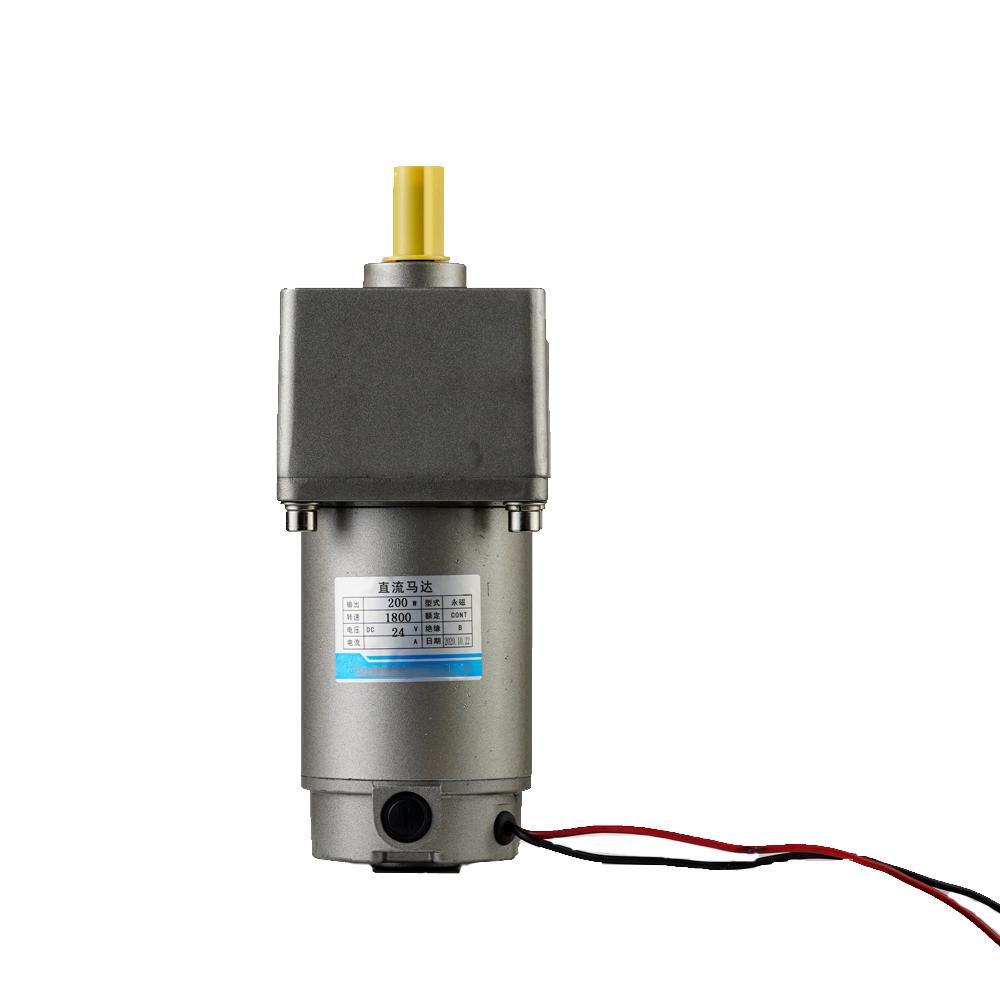
Selecting the ideal motor technology remains a critical bottleneck for engineering and procurement teams alike. Making the wrong choice compromises product performance, inflates unit costs, and complicates electronic controls. The core trade-off usually comes down to mechanical simplicity versus electronic sophistication. You must weigh the lower upfront cost of traditional commutation against higher efficiency and zero brush wear. This article provides an evidence-based evaluation framework to guide your decision-making process. We will explore how different commutation methods impact reliability, thermal management, and overall operational success. Choosing the right DC Motor dictates your product's lifespan and commercial viability.
Key Takeaways
Commutation Method Determines Lifespan: Brushed motors rely on physical contact (causing wear and EMI), while brushless motors use electronic controllers, vastly extending operational life.
Cost vs. Value: Brushed motors win on initial component cost; brushless motors win on Total Cost of Ownership (TCO) in high-duty-cycle applications.
Control Complexity: Adopting brushless technology requires integrating an Electronic Speed Controller (ESC), increasing engineering overhead.
Application Fit: The final choice depends on thrust-to-weight requirements, thermal constraints, and EMI compliance rather than universal superiority.
How Commutation Impacts Reliability and Maintenance
Understanding the internal mechanics of a motor is essential for predicting its long-term reliability. The method used to reverse current direction—known as commutation—serves as the primary dividing line between different motor technologies. This mechanical or electrical process directly influences maintenance schedules and overall durability.
The Brushed Mechanism
Traditional motors utilize a purely physical connection to achieve commutation. Spring-loaded carbon brushes press directly against a rotating commutator. As the rotor spins, these brushes continuously flip the electrical current, keeping the motor turning.
From an evaluation standpoint, this physical contact introduces unavoidable friction. Friction naturally generates heat and degrades the carbon brushes over time. The system eventually produces carbon dust, which can contaminate sensitive internal components. Because of this wear, operators face mandatory maintenance intervals. You must routinely inspect and replace the brushes to prevent sudden motor failure. When specifying a DC Motor for continuous industrial use, you must factor in this planned downtime.
Common Mistake: Ignoring the environmental impact of carbon dust. Operating these motors in cleanrooms or highly sterile environments often leads to contamination issues.
Best Practice: Always schedule preventative maintenance checks based on operational hours rather than waiting for performance degradation.
The Brushless (BLDC) Mechanism
Brushless motors take an entirely different approach. They replace physical brushes and commutators with electronic commutation. A dedicated controller monitors the rotor's position using either Hall-effect sensors or sensorless back-Electromotive Force (back-EMF). The controller then rapidly switches the current through the stationary stator coils to pull the rotor forward.
Through the evaluation lens, eliminating physical contact removes the system's primary failure point. There is no friction, no carbon dust, and no arcing. The lifespan of the motor becomes limited almost exclusively by the mechanical bearings. This enables continuous, maintenance-free operation for thousands of hours. You gain significant reliability in applications where accessing the motor for repairs is difficult or impossible.
Performance Evaluation: Efficiency, Torque, and Speed
Beyond basic reliability, performance metrics dictate which technology suits your specific application. Engineers must evaluate how efficiently each motor converts electrical energy into physical motion.
Efficiency and Thermal Management
Thermal management plays a crucial role in sustained motor performance. Brushless motors run significantly cooler than their traditional counterparts. Because they mount the copper coils on the stationary outer stator, heat dissipates easily into the surrounding motor housing. You can easily attach an external heat sink for further cooling. Consequently, they convert more electrical power into mechanical power, typically achieving 85% to 90% efficiency.
Conversely, traditional designs house their coils on the spinning rotor. Heat becomes trapped deep inside the motor core. This thermal bottleneck reduces overall efficiency to roughly 75% to 80%.
Torque Delivery
The torque profiles of these two technologies differ dramatically.
Brushed: These motors deliver excellent low-speed torque. They provide immediate, robust rotational force right upon startup. You can deploy them simply, relying on a basic DC power supply without integrating complex electronic drives.
Brushless: These designs offer a much flatter torque curve across a considerably wider speed range. They maintain consistent power at high RPMs. However, achieving optimal low-speed torque requires highly precise controller tuning and sensored feedback.
Power-to-Weight Ratio
When weight constraints dominate the design requirements, brushless technology consistently outperforms. The absence of a bulky mechanical commutator allows for a highly compact internal structure. They achieve massive RPMs and robust torque within exceptionally lightweight form factors. Choosing a brushless DC Motor is often non-negotiable for portable, battery-powered devices.
Performance Metrics Summary
Metric
Brushed Technology
Brushless Technology
Typical Efficiency
75% - 80%
85% - 90%
Low-Speed Torque
Excellent out-of-the-box
Requires controller tuning
Thermal Management
Poor (heat trapped in rotor)
Excellent (coils on stator)
Power-to-Weight
Moderate to Low
Exceptionally High
Lifecycle Economics and Upfront Procurement
Procurement teams must carefully balance the immediate budget against long-term financial viability. The commercial reality of motor selection goes far beyond the initial purchase price.
Upfront Procurement Costs
Traditional motors win decisively during the initial procurement phase. They require virtually no peripheral electronics to function. You apply direct voltage, and the motor spins. This simplicity keeps the initial Bill of Materials (BOM) incredibly low. For cost-sensitive consumer goods like toys or basic household appliances, this low barrier to entry is highly attractive.
Hidden Lifecycle Costs
However, the initial savings often mask hidden operational expenses. You must factor in the cost of future brush replacements. More importantly, you must account for the financial impact of machine downtime. In industrial settings, halting a production line to replace motor brushes costs exponentially more than the motor itself. Furthermore, the overall lifespan of the motor is considerably shorter.
The Brushless Investment
Adopting brushless technology requires a higher initial investment. You pay more for the precision-manufactured motor, and you must also purchase a compatible Electronic Speed Controller (ESC). Yet, this investment yields strong returns over time. You benefit from measurable energy savings due to higher efficiency. You eliminate routine maintenance costs entirely. Finally, the enhanced durability allows manufacturers to offer extended product warranties, elevating the brand's perceived quality in the marketplace.
Application-Driven Selection Criteria
There is no universally superior motor. The correct choice depends entirely on the specific demands of your application. Let us examine how industry leaders apply these technologies across different sectors.
Unmanned Aerial Vehicles (Drones) and Aerospace:
Driver: The primary constraints here are the thrust-to-weight ratio and battery life. Every gram matters, and every milliamp must be conserved.
Winner: Brushless is strictly mandatory for viability. Traditional motors are simply too heavy and inefficient to keep a drone airborne for practical durations.
Industrial Gear Motors and Actuators:
Driver: These applications prioritize transmission alignment and continuous, high-torque delivery at very low speeds.
Winner: Both technologies are viable here. Engineers frequently retain traditional designs for cost-sensitive, intermittent-use linear actuators, such as automated window openers or adjustable office desks. For a highly reliable intermittent application, a traditional DC Motor performs flawlessly.
Medical Devices and Hazardous Environments:
Driver: Spark elimination, stringent cleanroom compliance, and strict Electromagnetic Interference (EMI) limits dictate the design.
Winner: Brushless dominates this space. The complete absence of arcing from physical brushes makes them safe for oxygen-rich medical environments. Furthermore, they do not produce carbon dust, ensuring compliance with strict cleanroom standards.
Implementation Risks and Controller Complexity
Transitioning to advanced motor technologies is not without engineering challenges. You must accurately assess your internal capabilities before committing to a design architecture.
Engineering Overhead
Adopting electronic commutation significantly increases engineering overhead. You cannot simply connect a battery to the terminals. The system requires firmware development, ESC integration, and highly precise rotor positioning control. Engineers must carefully tune the Proportional-Integral-Derivative (PID) loops within the controller to ensure smooth startup and accurate speed regulation. This demands specialized electrical engineering expertise.
Environmental Vulnerabilities
While the mechanical motor itself is highly durable, the required electronic controller is sensitive. Brushless ESCs contain delicate microprocessors and MOSFETs. They remain vulnerable to extreme heat, moisture, or heavy vibration unless heavily potted and sealed. If the controller fails, the entire drive system halts.
Shortlisting Logic
We recommend evaluating your in-house electrical engineering bandwidth before committing to a sophisticated architecture.
Best Practice: If control simplicity is paramount, the duty cycle is intermittent, and cost margins are tight, a traditional motor remains a highly rational choice.
Common Mistake: Over-engineering a simple application. Do not force a complex electronic drive into a product that only requires basic on/off functionality.
Conclusion
The engineering decision surrounding motor technology is a delicate balancing act. You must weigh the immediate benefits of low cost and mechanical simplicity against the long-term advantages of thermal efficiency and extreme durability.
We strongly advise engineering and purchasing teams to align their final choice with the product's expected duty cycle, regulatory compliance requirements, and target retail price. Intermittent consumer devices rarely justify the expense of electronic controllers, while high-stakes aerospace and medical applications demand the reliability of solid-state commutation.
Evaluating a Brushed vs Brushless DC Motor requires detailed data specific to your operational environment. Take action today to secure the best component for your build. Request a technical spec sheet, download a performance curve matrix, or contact our engineering support team for a custom application review.
FAQ
Q: Can a brushed DC motor be directly replaced with a brushless DC motor?
A: No. You cannot perform a simple drop-in replacement. Transitioning to a brushless setup requires adding an electronic controller (ESC) to manage commutation. You must also alter the wiring harness to accommodate three-phase power lines and sensor cables. Finally, you will likely need to redesign the mounting enclosure to fit the new components.
Q: Which DC motor type is better for high-torque, low-speed applications?
A: Brushed motors naturally excel in these scenarios. They deliver massive starting torque without requiring complex electronic tuning. However, sensored brushless motors paired with high-quality planetary gearboxes are becoming increasingly competitive, offering similar low-speed torque alongside zero maintenance.
Q: Do brushless motors generate less Electromagnetic Interference (EMI)?
A: Yes. Traditional motors generate significant mechanical EMI due to the constant sparking and arcing of physical brushes against the commutator. Brushless designs eliminate this arcing entirely. However, you must still properly manage the electrical noise generated by the high-frequency switching of the electronic controller.
Q: How much longer do brushless motors actually last?
A: The lifespan difference is substantial. Traditional brushed motors typically last between 1,000 and 3,000 operational hours before requiring a brush replacement. In contrast, brushless motors easily exceed 10,000 to 20,000 continuous hours. Their operational life is generally limited only by the wear and tear on the mechanical bearings.