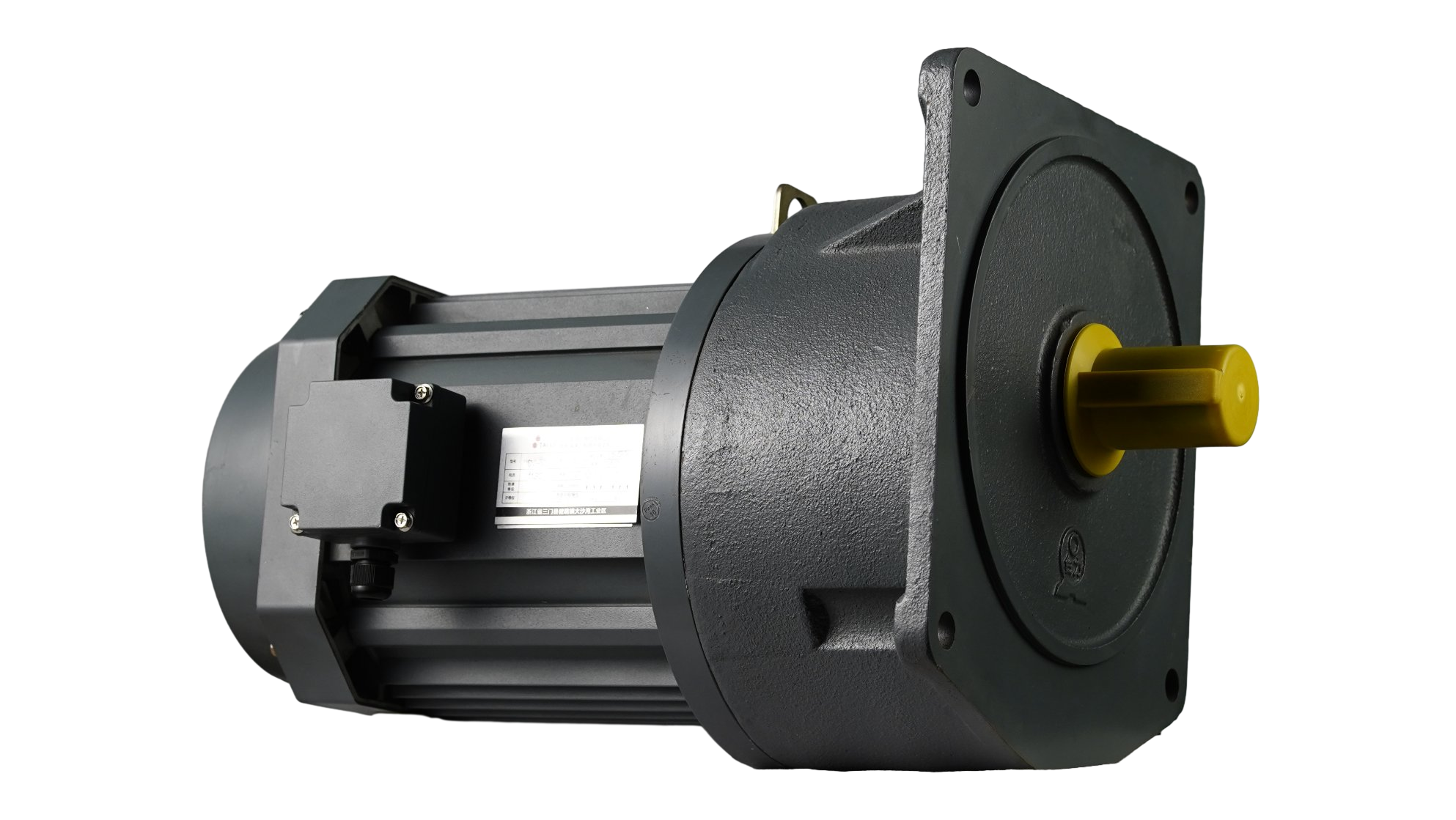
Sourcing an AC gear motor for an OEM application is a high-stakes decision. A minor supplier variance can cause downstream production bottlenecks, increased warranty claims, or total system failures. You cannot afford unexpected equipment downtime in demanding environments.
Marketing brochures often overstate actual manufacturing capabilities. Procurement teams and lead engineers must look past basic product catalogs. They need to thoroughly assess true engineering depth, production scalability, and supply chain resilience. Unverified supplier claims often lead to catastrophic project delays.
This guide provides a pragmatic, evidence-based framework. You will use it to audit, shortlist, and select a highly capable AC gear motor manufacturer. We will show you how to find partners equipped for reliable, long-term OEM integration. By evaluating key technical and operational metrics, you can confidently secure your entire supply chain.
Key Takeaways
A viable OEM partner must prove they can scale from rapid prototyping to full-volume production without quality degradation.
Off-the-shelf catalog matching is insufficient; evaluate the manufacturer’s agility in delivering a custom gear motor tailored to unique torque, space, and environmental constraints.
Transparent supply chain data, documented quality control (QC) procedures, and clear communication protocols are just as critical as raw technical specifications.
Always require verifiable testing data (e.g., thermal limits, load testing) before moving to the shortlisting phase.
Assessing Technical Breadth and Standard Architecture
You must evaluate a supplier's foundational product portfolio thoroughly. Strong manufacturers natively support core motor architectures. We recommend verifying their baseline capabilities before requesting any customizations. This establishes their overall mechanical and electrical engineering competence.
Configuration compatibility is your first major checkpoint. Evaluate their ability to supply different spatial orientations for various machine footprints. Can they deliver a reliable parallel shaft gear motor for inline space constraints? Do they also manufacture a robust horizontal reduction motor for base-mounted stability? Application environments strictly dictate these mechanical constraints. A capable partner always offers multiple layout options.
Next, examine power capabilities and application matching closely. Industrial applications usually demand continuous, heavy-duty operation profiles. Does the supplier offer a heavy-duty 3 phase gear motor featuring Class F or Class H insulation? Compare this to their standard single-phase offerings. Lighter commercial equipment might only need single-phase units. However, robust three-phase designs demonstrate deeper copper winding and thermal management expertise.
Specialized kinematics also reveal true manufacturing maturity. Assess their ability to produce complex, precision assemblies. A specialized linear gear motor requires incredibly tight machining tolerances. Furthermore, high-torque industrial applications often require a specific low RPM AC gear motor. These precision-speed applications test a supplier's gear-cutting precision according to AGMA standards. If they cannot produce these units, they likely lack critical in-house CNC machinery.
Watch out for obvious red flags during catalog reviews. A narrow product catalog is highly suspicious. It often indicates a distributor masquerading as a true manufacturer. These companies act as mere assemblers. They usually lack core rotor winding capabilities. They also routinely outsource their primary gear-cutting processes. This extreme outsourcing creates massive long-term quality risks.
Table 1: Standard Gear Motor Architecture Comparison
Motor Architecture
Typical OEM Application
Key Evaluation Metric
Parallel Shaft
Conveyors, packaging machinery
Inline space efficiency, gear durability
Horizontal Reduction
Heavy material handling equipment
Base mounting stability, load distribution
Linear Gear Motor
Precision actuators, lifting mechanisms
Stroke precision, maximum thrust capacity
Custom Gear Motor Capabilities and Prototyping Agility
Standard motors rarely fit optimized OEM equipment perfectly. You usually face strict dimensional limits and thermal boundaries. Customization is the harsh reality of modern OEM manufacturing. Finding an exact off-the-shelf match is rare.
Engineering collaboration drives successful integration. You must assess the engineering team's responsiveness early. Do they offer direct engineer-to-engineer communication? Your engineers need to discuss complex variables immediately. They must analyze load types, duty cycles, and integration points directly. Passing technical requirements through non-technical salespeople causes dangerous miscommunications.
A rigorous prototyping framework is absolutely essential. You need to understand their exact timeline for delivering a custom gear motor. What is their standard lead time for initial structural prototypes? Fast prototyping accelerates your time-to-market significantly. Furthermore, demand complete financial transparency upfront. Custom tooling costs must be clearly defined. Non-Recurring Engineering (NRE) fees should never surprise your procurement team.
Verification separates true engineering experts from amateurs. Do not just take their word for it. Request detailed case studies. Ask for anonymized engineering blueprints. These documents show how they solved specific design challenges. For example, did they adapt an existing housing to resolve a client's thermal limitation? Did they design custom heat sinks? Real-world evidence proves their problem-solving agility.
Quality Control Rigor and Manufacturing Scalability
Building ten perfect motors is relatively easy. Building ten thousand motors seamlessly is incredibly hard. This prototype-to-production gap destroys many OEM projects. You must aggressively verify their mass-production quality controls.
Certifications and compliance establish a vital operational baseline. Demand undeniable proof of ISO 9001 certification. Check for industry-specific equivalents if necessary. Look for valid UL/CSA recognitions and genuine CE marks. Never accept marketing phrases like "designed to meet." You require actual, verifiable regulatory certifications to ensure safety compliance.
Robust testing protocols guarantee long-term field reliability. We recommend evaluating their exact testing methodologies thoroughly.
End-of-line testing: Do they test every single manufactured unit? Batch sampling leaves unacceptable field risks for OEM integration.
Dynamometer testing: They must utilize in-house dynamometers. This verifies actual torque outputs under simulated operational loads.
NVH analysis: Noise and vibration harshness testing is critical. Excessive vibration indicates poor gear meshing and predicts premature bearing failure.
IP-rating verification: Ingress protection testing ensures environmental durability. This is non-negotiable for harsh industrial applications exposed to dust or water.
Capacity transparency protects your future business growth. You need to know their absolute manufacturing limits. Ask for their maximum monthly throughput numbers. Inquire about their current capacity utilization percentages. They must have enough buffer room. This ensures they can absorb your unexpected volume surges without compromising quality.
Supply Chain Resilience and Lead Time Realities
A gear motor is a highly complex assembly. It relies on a sum of critical sub-components. These include copper wire windings, precision bearings, synthetic lubricants, and machined gears. You must investigate their raw material sourcing strategies. Where do they get their essential parts?
Risk mitigation prevents sudden production stoppages. Evaluate their internal buffer stock policies aggressively. Do they keep extra critical sub-components on hand? Material shortages can instantly halt assembly lines. Additionally, assess all geographical risks. If they operate offshore, examine their local support network. What is their domestic warehousing strategy? Localized inventory prevents disastrous international shipping delays.
Contractual lead times require aggressive negotiation. You must move past vague "average lead times." Averages do not protect your strict assembly schedules. Negotiate tight Service Level Agreements (SLAs). These SLAs must define specific delivery windows. They should mandate strict safety stock requirements. Crucially, they must include severe financial penalties for any supplier delays.
The Shortlisting Logic: An OEM Partner Evaluation Matrix
The shortlisting process demands a structured, logical approach. Begin with an initial vendor audit packet. Request their official quality manual. Ask for a comprehensive factory equipment list. Review their organizational chart carefully. This initial desk-audit removes unqualified candidates quickly.
Next, initiate a functional pilot test. Order a small batch of standard units first. Do this before engaging in expensive custom engineering work. This test reveals their true operational habits. You can measure their communication speed directly. You can inspect their packaging quality physically. It also exposes their real-world shipping logistics.
Evaluating overall value requires looking beyond the initial unit price. You must factor in hidden operational risks. Communication delays waste valuable engineering hours. Warranty replacements damage your brand reputation permanently. Minimum order quantity (MOQ) inflexibility ties up vital capital. Always disqualify the cheapest bidder if they lack transparency. They must provide verifiable MTBF (Mean Time Between Failures) data. They also need a clear, documented Root Cause Analysis (RCA) process for field failures.
Chart 1: Supplier Evaluation Scoring Chart
Evaluation Criteria
High Score Indicators (5 Points)
Low Score Indicators (1 Point)
Engineering Agility
Direct engineer access, rapid NRE quotes
Sales-only contact, hidden design fees
Quality Control
100% end-of-line testing, in-house dynamometer
Batch sampling only, no NVH analysis
Supply Chain
Localized safety stock, transparent sourcing
Just-in-time reliance, unverified raw suppliers
Reliability Data
Verified MTBF reports, fast failure analysis
Vague lifespan claims, no RCA process
Conclusion
Selecting an AC gear motor manufacturer is not a simple transactional purchase. It represents a deep structural integration into your supply chain. Choosing the wrong supplier risks your entire production capability.
Your next steps require deliberate action.
Move beyond digital catalogs and glossy marketing claims.
Narrow your focus down to two or three highly qualified suppliers.
Request their technical quality manuals for a detailed desk audit.
Initiate a formal Request for Quotation (RFQ) centered on a technically demanding prototype.
Demand absolute transparency regarding lead times, NRE fees, and capacity limits.
Following this structured evaluation framework protects your OEM applications. It ensures you partner with true experts capable of delivering long-term, scalable performance.
FAQ
Q: What is a reasonable lead time for a custom AC gear motor prototype?
A: Simple modifications usually take two to four weeks. These include minor shaft length adjustments or basic wiring changes. Full custom gearings or unique housing designs may require six to twelve weeks. Always clarify NRE costs before commissioning any custom prototype work.
Q: How do I verify a manufacturer's claims about a low RPM AC gear motor's torque output?
A: Request the motor's performance curve data. Ask for detailed dynamometer test reports. Ensure the continuous operating torque handles your specific duty cycle. Verify it operates safely at your maximum ambient temperature. Never rely solely on peak stall torque ratings.
Q: Why does it matter if a supplier is a true manufacturer versus a distributor?
A: True manufacturers control the entire quality assurance process. They implement vital engineering changes rapidly. By working directly with a manufacturer, you avoid layered markups. You also eliminate the frustrating communication bottlenecks inherent to third-party distributor networks.
Q: Should I specify a parallel shaft gear motor or a right-angle gear motor for my OEM equipment?
A: Parallel shaft motors generally offer higher efficiency. They are ideal when your application allows an inline footprint. Right-angle models are better for tight spatial constraints. However, they may sacrifice a small percentage of mechanical efficiency. Consult an AC gear motor engineer to finalize based on your 3D CAD constraints.