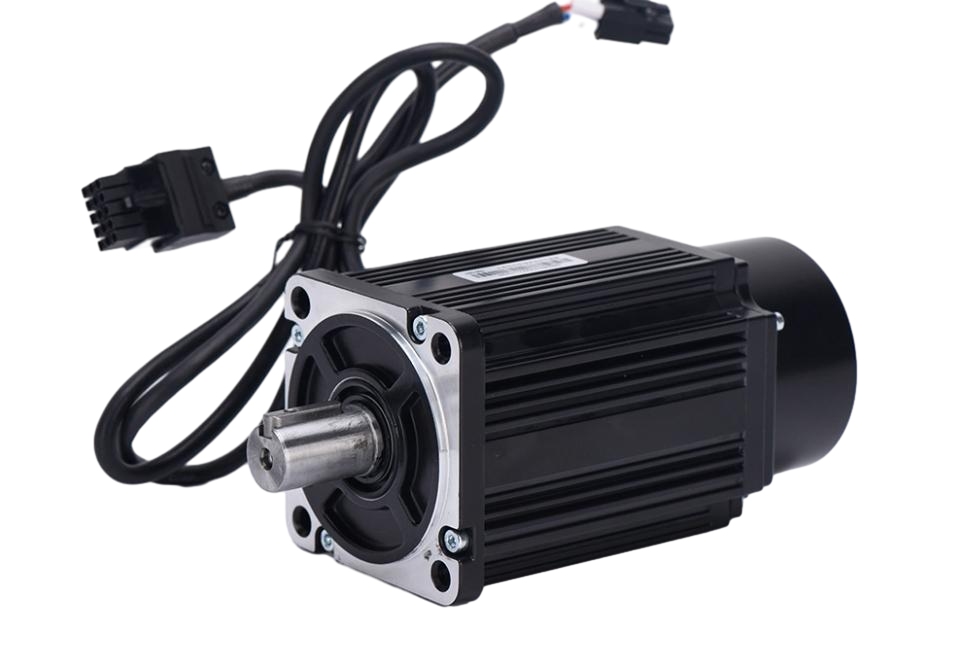
Transitioning from off-the-shelf components to custom motion control solutions introduces significant supply chain risks. You also face complex engineering hurdles. Off-the-shelf products often fall short of exact mechanical constraints. They might also fail to deliver the precision needed for specialized machinery. This performance gap creates a complex challenge for industrial engineering teams.
Selecting the right manufacturing partner goes far beyond comparing basic data sheets. You must evaluate their co-engineering capabilities thoroughly. You also need to assess their production scalability and system compatibility deeply. Failing to do so can lead to costly delays. Worse, it can cause catastrophic equipment failures in the field.
In this comprehensive guide, we provide procurement and engineering teams with an evidence-based framework. You will learn how to shortlist OEM/ODM partners for custom motor projects effectively. We explore essential evaluation criteria in detail. These range from agile prototyping methods to final drive integration protocols. By following these steps, you ensure seamless deployment. You also guarantee highly reliable performance for your unique industrial applications.
Key Takeaways
A reliable manufacturer must offer transparent Non-Recurring Engineering (NRE) costs and clear prototype-to-production timelines.
Customization should extend beyond the motor shaft—encompassing precise encoder matching, specific drive compatibilities, and thermal optimizations.
Verifiable quality assurance (QA) protocols and compliance certifications (e.g., CE, UL, ISO) are non-negotiable for industrial-scale deployment.
1. Co-Engineering and Agile Prototyping Capabilities
A capable partner functions as a direct extension of your R&D team. They are not just a simple build-to-print vendor. You need them to validate your design concepts early. This validation prevents incredibly expensive mistakes later in production. Active collaboration streamlines the entire development cycle.
Expect upfront 3D CAD modeling from your chosen partner. They should also perform complex magnetic field simulation using Finite Element Analysis (FEA). Thermal dynamic analysis is another crucial step. They must execute these specific simulations before cutting any physical prototype. This proactive approach identifies potential overheating issues immediately. It also optimizes the internal magnetic circuit for maximum torque density.
Look for clearly defined Service Level Agreements (SLAs). These agreements must outline exact prototype delivery timelines. Knowing exactly when you will receive the first testing unit helps synchronize your internal schedules. It prevents downstream bottlenecks in your own product launch.
You also need to assess their protocol for handling design iterations. Scope creep often happens during the early prototyping phase. A structured change-management process mitigates these risks effectively. They should document every minor design tweak meticulously.
Best Practice: Always request an initial feasibility report before committing any engineering funds.
Common Mistake: Rushing directly to physical prototyping without validating thermal models first.
2. Technical Breadth and Customization Depth
The manufacturer must demonstrate deep technical expertise. They need to modify core technologies to hit exact performance targets. Standard catalog units rarely fit highly specialized niches perfectly. You require tailored engineering to gain a true competitive edge.
Consider their stator and rotor customization skills first. You must evaluate their ability to engineer a customized permanent magnet AC servo motor versus a standard AC servo motor. This decision depends entirely on your specific torque-to-inertia requirements. High-dynamic applications require ultra-low inertia rotors. Heavy-duty lifting might demand much higher inertia for stable load matching.
Next, examine their precision feedback integration carefully. They must have the capability to specify and integrate a servo motor with encoder seamlessly. You might need simple incremental encoders for basic speed control. Absolute encoders prevent tedious homing sequences after power loss. Resolvers survive extreme temperatures and harsh vibrations better. Proper sensor integration is vital for high-resolution positioning tasks.
Finally, look closely at specific material and winding adjustments. A top-tier partner offers highly specialized copper windings. They can adjust the copper fill factor to boost continuous torque output. They also provide unique lamination materials. Using thinner silicon steel laminations reduces eddy current losses significantly. These specific modifications help deliver a truly high-efficiency servo motor. This custom design minimizes thermal losses during continuous, demanding factory operations.
3. Application-Specific Tuning and Durability
Custom projects require highly robust hardware. We must build it for the exact realities of its final deployment environment. Laboratory performance does not always translate to factory floor reliability. Engineers must account for real-world physical abuse.
High-precision machining remains a primary requirement here. This is especially true when specifying a servo motor for CNC applications. You need exceptionally low cogging torque to prevent surface ripples during complex milling. You also demand immense structural rigidity. Minimal shaft runout ensures flawless finishes on highly machined metal parts.
Next, consider harsh environment resilience very carefully. You must establish strict evaluation criteria for a servo motor for industrial automation or heavy robotics. Look for custom Ingress Protection (IP) ratings. IP65 handles intense water washdowns. IP67 survives temporary liquid submersion. You might also need customized mounting flanges to fit extremely tight spaces. Heavy-duty bearing selections extend operational lifespans under high radial loads.
Finally, demand concrete proof of mechanical integrity. The manufacturer should provide extensive vibration and shock resistance data. They must conduct rigorous testing under simulated environmental stress. This testing proves the unit can survive real-world industrial abuse without premature failure. It guarantees long-term durability in unpredictable operational settings.
4. Complete System Compatibility and Drive Integration
A motor is only as effective as the electronic controls driving it. The manufacturer must ensure seamless ecosystem integration. Hardware alone cannot solve complex motion control challenges. The software layer dictates ultimate machine performance.
They should offer a paired, highly optimized servo motor driver. Matched systems often yield superior auto-tuning capabilities. They minimize mechanical resonance issues right out of the box. Alternatively, the partner must guarantee compatibility with your existing third-party drives. They should provide exact motor parameter files to simplify initial commissioning.
Protocol agnosticism is another critical integration factor. Ensure the customized motor and drive systems integrate smoothly. They must work flawlessly with standard industrial Programmable Logic Controllers (PLCs). Look for native support for major communication fieldbuses. EtherCAT offers microsecond network synchronization. PROFINET dominates modern European manufacturing lines. Modbus remains a universal, highly reliable fallback. This flexibility streamlines your software engineering phase immensely.
You should also actively avoid vendor lock-in. Maintain a very skeptical approach to highly proprietary communication protocols. Only accept them if they offer a verifiable, unique competitive advantage. Open network standards usually provide much better long-term flexibility for your internal engineering and maintenance teams.
5. Cost Transparency, Scalability, and Quality Assurance
Bottom-line viability depends entirely on what happens after initial prototype approval. You must secure a predictable financial runway for ongoing mass production. Unforeseen expenses quickly ruin project budgets.
First, demystify the complex manufacturing cost structures. You must differentiate clearly between upfront Non-Recurring Engineering (NRE) fees and hard tooling costs. NRE covers R&D, software simulation, and initial prototyping labor. Tooling covers physical molds and custom testing fixtures. You also need clear visibility into final unit-at-volume pricing. Hidden production fees often derail custom projects unexpectedly.
Production scalability is equally vital for commercial success. Audit the facility's overall capacity to scale up seamlessly. Can they transition from a tiny 10-unit pilot run to a massive 10,000-unit mass production schedule? They must achieve this without catastrophic lead time blowouts. Reliable supply chain management is absolutely essential here. They should source critical rare-earth magnets and copper wire responsibly.
Lastly, demand highly verifiable Quality Assurance (QA) frameworks. You need transparent visibility into their specific end-of-line testing procedures. Look for automated dynamometer testing. This verifies torque curves across the entire speed range. High-voltage insulation tests guarantee operator electrical safety. International compliance backing like CE, UL, and ISO is mandatory. Any reputable Servo Motor manufacturer provides these official compliance reports readily.
Table: Custom Motor Evaluation Criteria Across Project Phases
Evaluation Phase
Primary Focus Areas
Key Deliverables Expected
Design & Simulation
Thermal limits, magnetic saturation, structural rigidity
FEA reports, 3D CAD models, feasibility analysis
Agile Prototyping
Form factor fit, initial tuning, basic functionality
Unit cost reduction, yield consistency, supply chain
End-of-line test reports, volume pricing, compliance certs
Conclusion
Choosing the right engineering partner requires careful, strategic balance. You must weigh raw technical capability against long-term supply chain stability. You also need absolute cost transparency from day one. Moving beyond standard catalogs opens up immense machine design possibilities. However, your project success relies heavily on finding a team that collaborates actively. You need a dedicated partner who provides verifiable engineering data, not just glossy marketing claims.
Follow these actionable next steps to structure your Request for Quote (RFQ) or Request for Information (RFI):
Request a highly detailed NRE breakdown and custom tooling cost estimate upfront.
Ask for anonymized field case studies of similar custom drive integrations.
Demand a clear SLA covering initial prototype delivery and specific design iteration limits.
Specify required compliance certifications and mandatory end-of-line physical testing protocols.
By insisting on these specific elements, you effectively filter out unreliable vendors. You identify partners truly capable of handling advanced custom engineering projects.
FAQ
Q: What is a typical Minimum Order Quantity (MOQ) for a custom servo motor?
A: Prototype batches often require no strict MOQ. This allows initial orders of just 1 to 10 units for field testing. However, mass production MOQs usually depend heavily on the customization extent. Minor shaft modifications might only need 100 units. Complex winding or custom housing changes could easily push MOQs to 500 units. Always clarify volume expectations early.
Q: How long does it take to develop a custom AC servo motor from spec to prototype?
A: Setting realistic expectations is crucial for your project timeline. Developing a custom unit typically takes 4 to 12 weeks. Minor tweaks to an existing standard frame sit at the shorter end. Highly complex projects involving new copper windings, specialized feedback encoders, and custom tooling will push delivery timelines toward 12 weeks.
Q: Does customizing a motor affect CE/UL certifications?
A: Yes, significant electrical or thermal modifications often require complete laboratory re-certification. Minor mechanical changes like adjusting shaft length usually do not impact existing safety approvals. A capable manufacturer proactively manages this complex compliance process. They ensure the modified unit meets all regional safety standards before mass production actually begins.
Q: Should I source the servo motor driver from the same manufacturer?
A: Sourcing both components from one vendor guarantees perfect compatibility. It also provides a single-source warranty, simplifying future troubleshooting. However, this approach can risk unwanted vendor lock-in. If you use standard communication protocols like EtherCAT, you can safely mix vendors. Evaluate your need for seamless integration versus ongoing supply chain flexibility carefully.