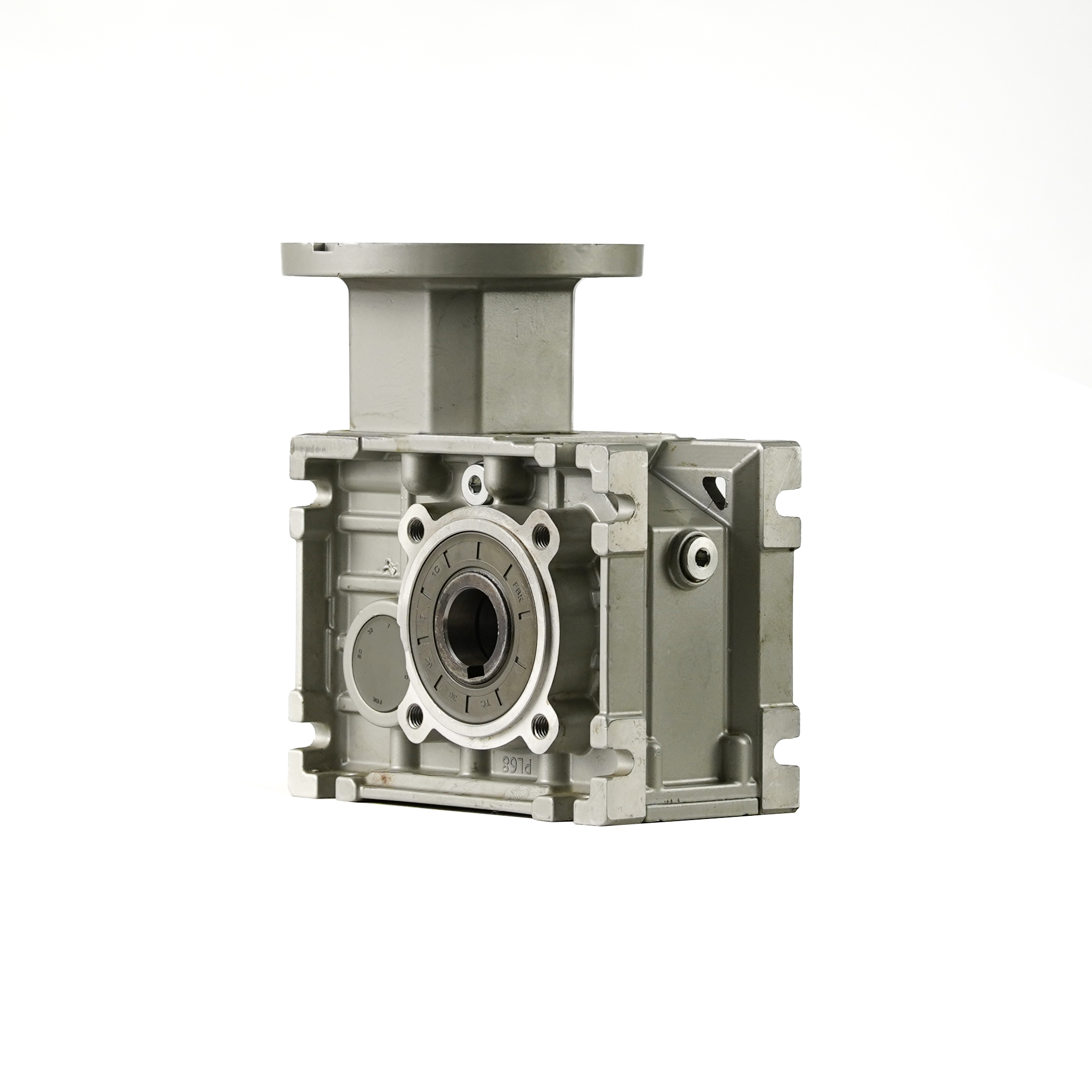
Engineers constantly face severe mechanical design challenges. We must balance extremely high torque demands inside increasingly shrinking physical spaces. In many demanding scenarios, such as heavy robotics or aerospace maneuvering, strict acoustic limits further complicate these transmission requirements. You need massive power, but you cannot afford structural bulk or excessive noise. A hypoid gear bridges this difficult gap effectively. It functions as a unique hybrid between a standard bevel and a worm gear. It operates on non-intersecting, offset axes to deliver distinct mechanical characteristics. However, adopting this sophisticated technology involves more than understanding basic mechanics. We must conduct a thorough commercial and engineering evaluation. This comprehensive guide helps procurement and design teams assess potential performance gains. You will learn if these advantages truly justify the complex manufacturing processes required. We will explore torque density, acoustic control, design versatility, and key operational trade-offs deeply to inform your next power transmission project.
Key Takeaways
Torque Density: The offset axis allows for a larger, stronger pinion, delivering higher load capacity than traditional intersecting-axis gears of the same size.
Acoustic Control: Simultaneous sliding and rolling action creates an inherently smooth-running gearbox, drastically reducing vibration and noise.
Design Versatility: Shafts can pass each other without interference, enabling highly compact, all-round installation configurations.
Operational Trade-offs: High sliding friction mandates specialized Extreme Pressure (EP) lubrication and precise thermal management to prevent premature wear.
Defining the Drive Challenge: When Should You Evaluate Hypoid Gears?
Engineers constantly encounter shrinking footprint allowances across modern industries. Factory floors demand compact machinery to maximize production density. Strict noise emission regulations add immense pressure to modern mechanical designs. Organizations like OSHA enforce rigid workplace acoustics standards. We also require highly efficient power transmission to meet global energy directives. Standard right-angle drives often force a difficult compromise during the design phase. Often, standard components are simply too bulky for the available space. Alternatively, they lack sufficient load-bearing strength for heavy-duty applications.
Standard intersecting axes fundamentally limit how much torque a system can safely manage. When standard right-angle drives fail, they cause cascading production losses. Factories cannot afford continuous downtime simply because a standard gear stripped its teeth under shock loads. We need better, more adaptable alternatives. Consider a helical hypoid gearbox for your next project. Engineers purpose-built this exact solution for high-torque, right-angle power transmission. It excels where spatial efficiency remains strictly non-negotiable. You can bypass the usual size-versus-strength compromises completely. Modern automation relies heavily on these compact systems. They fit comfortably into tight robotics joints and easily integrate into crowded conveyor chassis designs.
Core Engineering & Performance Advantages
Superior Torque Capacity and Load Distribution
Pinion geometry dictates the ultimate strength of any gearset. The offset axis sets these advanced drives apart from conventional options. It permits a noticeably larger pinion diameter overall. You consequently get more teeth in mesh simultaneously. Compare this directly to standard bevel gears. Standard bevels physically restrict maximum pinion size due to intersecting axes. A larger pinion fundamentally alters internal load distribution. It reduces the mechanical stress concentrated on any single tooth.
A larger pinion naturally increases the contact ratio. The contact ratio defines how many teeth share the mechanical load simultaneously. A higher ratio means smoother transitions and vastly reduced stress per tooth. This structural outcome proves highly beneficial for heavy industrial applications. It translates directly to significantly higher shock-load resistance. You achieve a much longer operational lifespan under harsh conditions. The system handles heavy continuous loads effortlessly. Mining crushers and industrial extruders rely on this exact resilience.
Acoustic Performance and Vibration Dampening
Mesh dynamics play a crucial role in overall system acoustics. The gear teeth undergo a unique sliding action during engagement. This sliding action actively buffers impact forces between raw metal surfaces. It eliminates the harsh metallic clashing found in traditional straight-cut gears. Engineers focus heavily on reducing Noise, Vibration, and Harshness (NVH). The simultaneous rolling and sliding motion dampens vibration naturally at the source.
Engineers conduct rigorous NVH testing on newly designed powertrains. They utilize advanced spectral analysis to measure decibel outputs. Offset gearsets consistently outperform straight-cut alternatives in these stringent tests. This directly benefits noise-sensitive operational environments. It creates a highly effective, deeply reliable low-noise gearbox. You will find this characteristic absolutely critical for modern passenger vehicles. Medical imaging equipment relies heavily on silent, vibration-free operation. MRI tables must glide smoothly to prevent patient anxiety. Patients and audiences expect zero acoustic interference.
Spatial Efficiency and Packaging
Non-intersecting shafts provide incredible design freedom for mechanical engineers. Bypassing shafts effectively eliminate frustrating mechanical interference. You no longer need to align every component on a single restrictive plane. This geometric advantage unlocks entirely new system layout possibilities. Engineers can design a highly adaptable, highly flexible all-round installation gearbox. Space constraints no longer artificially dictate your power transmission limits.
The outcome proves transformative for complex system packaging. Lowering a vehicle's center of gravity improves high-speed cornering stability. Automotive engineers use this trait to lower drive shafts effectively. A lowered driveshaft increases passenger cabin space significantly. In industrial settings, minimizing a robot's shoulder joint size allows it to reach tighter spaces. Conveyor belts can sit lower to the factory floor, improving worker ergonomics.
Evaluation Matrix: Hypoid vs. Alternative Gear Reducers
We must carefully compare these systems against standard industrial alternatives. Selecting a reliable gear reducer requires thorough parameter evaluation. Making the wrong choice leads to catastrophic system failures or excessive energy waste. Choosing between a spiral bevel, a worm gear, and an offset drive dictates your system's total efficiency.
Hypoid Gear vs. Spiral Bevel Gearbox: Axes alignment marks the first major structural difference. Hypoid drives specifically use non-intersecting offset axes. Conversely, a spiral bevel gearbox relies entirely on mathematically intersecting axes. This structural difference impacts strength and noise profiles directly. Hypoid drives offer much larger pinions and noticeably quieter operation. However, pure mechanical efficiency presents a slight trade-off here. Spiral bevel systems are slightly more efficient overall. They rely primarily on rolling friction rather than heavy sliding friction.
Hypoid Gear vs. Worm Gear: Efficiency differences between these two technologies remain stark. Hypoid drives typically maintain an impressive 90-95% efficiency rate. They vastly outperform standard worm gears across most industrial applications. Worm systems often drop below 75% efficiency at very high reduction ratios. Heat dissipation also heavily favors offset drive technology. Heat generation directly correlates with lost mechanical energy. Hypoid systems generate significantly less thermal energy during continuous operation. Worm drives often require heavy external cooling mechanisms or massive oil reservoirs.
Drive Technology Comparison Matrix
Technical Feature
Hypoid Gear
Spiral Bevel Gearbox
Worm Gear
Axes Configuration
Offset (Non-intersecting)
Intersecting
Offset (Non-intersecting)
Mechanical Efficiency
90% - 95%
95% - 98%
50% - 85% (Ratio dependent)
Torque Density
Very High
High
Moderate to High
Acoustic Profile
Very Quiet
Moderate Noise
Quiet
Thermal Generation
Moderate
Low
Very High
Implementation Realities: Risks, Limitations, and Lubrication
We must address the distinct friction trade-off honestly. The unique sliding action undeniably creates a remarkably smooth-running gearbox. However, this same complex motion generates immense sliding friction. Improper thermal management easily leads to severe metal scoring. Engineers must prioritize lubrication dependencies from the very beginning. These advanced drives rigorously mandate specialized gear oils. You must use lubricants containing aggressive Extreme Pressure (EP) additives. Standard mineral oils simply wipe away under such intense shear forces.
EP additives typically contain precise blends of sulfur and phosphorus compounds. Under extreme localized heat, these chemicals react directly with the steel. They form a sacrificial microscopic layer. This layer prevents direct metal-to-metal welding. Manufacturing tolerances add another serious layer of mechanical complexity. Generating these complex tooth profiles requires highly specialized machining equipment. Facilities often use costly Gleason or Klingelnberg cutting machines. This reality impacts your initial capital expenditure (CapEx) heavily. Routine replacement costs also run higher than standard straight-cut gears.
Furthermore, bearing alignment sensitivity demands strict, unwavering attention. You need a highly rigid, unyielding cast housing. You must establish exact, mathematically perfect bearing preloads. Skilled technicians utilize precision shims and advanced measuring tools to achieve exact tolerances. You cannot simply bolt these housings together and expect long-term reliability. Even microscopic misalignments drastically reduce overall gear life.
Common Mistakes to Avoid:
Substituting EP lubricants for standard industrial gear oils.
Using lightweight, flexible housings causing deflection under high loads.
Ignoring rigorous break-in procedures for newly machined gearsets.
Failing to monitor operational oil temperatures during peak loads.
Shortlisting Logic: Is a Hypoid Gearbox Right for Your Application?
Identifying ideal use cases ensures ultimate project success. Automotive differentials rely on them heavily across the globe. Heavy-duty conveyor systems benefit massively from their immense torque capacity. Robust environmental deployments also favor them over weaker alternatives. For instance, a wind application gearbox requires absolutely exceptional durability. A wind turbine operates hundreds of feet in the air. Maintenance crews cannot easily access these nacelles for routine repairs. Therefore, the internal components must survive extreme weather and unpredictable wind gusts. The high torque density of offset gears makes them perfect for isolated, high-stress environments.
Let's review a definitive success criteria checklist. Ask your engineering team these crucial questions:
Do you absolutely require right-angle power transmission?
Is lowering the system’s center of gravity a critical safety or design factor?
Must you strictly minimize overall system height to clear existing physical obstacles?
Are you replacing a thermally inefficient worm drive but require highly similar spatial form factors?
Does your specific application demand strict noise reduction protocols?
Next-step actions move you toward procurement safely and intelligently. First, request detailed kinematic simulations from your chosen vendor. Second, thoroughly review your facility's internal lubrication compliance protocols. You must secure consistent access to specialized EP fluids. Finally, order prototype CADs for spatial integration testing. Testing virtual models prevents costly physical machining errors later. Replacing an inefficient worm drive upgrades your system instantly. You gain higher efficiency while maintaining the exact same right-angle configuration.
Conclusion
Let's summarize the overarching technical return on investment. Hypoid drives absolutely demand higher initial capital investments. They also strictly enforce much more rigorous maintenance protocols. Yet, they provide an utterly unparalleled mix of physical torque density and acoustic control. Their high mechanical efficiency yields substantial, long-lasting operational benefits. Selecting the right power transmission component transforms machine reliability entirely. While offset options demand exact engineering, the vast performance rewards justify the rigorous effort.
We strongly encourage design engineers and procurement buyers to act proactively. Consult dedicated gear manufacturing specialists early in your conceptual design phase. Review specific load profiles carefully before finalizing any structural blueprints. Analyze your intended application environments thoroughly to ensure absolutely optimal mechanical performance. Your systems will run quieter, last significantly longer, and fit comfortably into tighter spaces. Embrace these advanced gear geometries to unlock peak industrial performance today.
FAQ
Q: Why do hypoid gears require special oil?
A: The high sliding velocity between teeth wipes away standard oils quickly. Extreme Pressure (EP) additives chemically bond to the metal surfaces. This specialized boundary layer prevents surface welding and galling during operation. Without EP additives, the gear teeth would destroy themselves rapidly under heavy loads.
Q: Can a hypoid gear reducer be back-driven?
A: Yes, hypoid systems are generally back-drivable. This sharply contrasts most high-ratio worm gears. Engineers must carefully account for this back-driving capability when designing safety mechanisms and braking systems. You cannot rely on them to hold a suspended load independently.
Q: How does the offset distance affect performance?
A: A larger offset increases the pinion size. This directly boosts overall torque capacity and tooth strength. However, it also increases sliding friction across the gear teeth. Consequently, mechanical efficiency lowers slightly as the offset grows larger. Engineers must balance physical strength and thermal efficiency carefully.