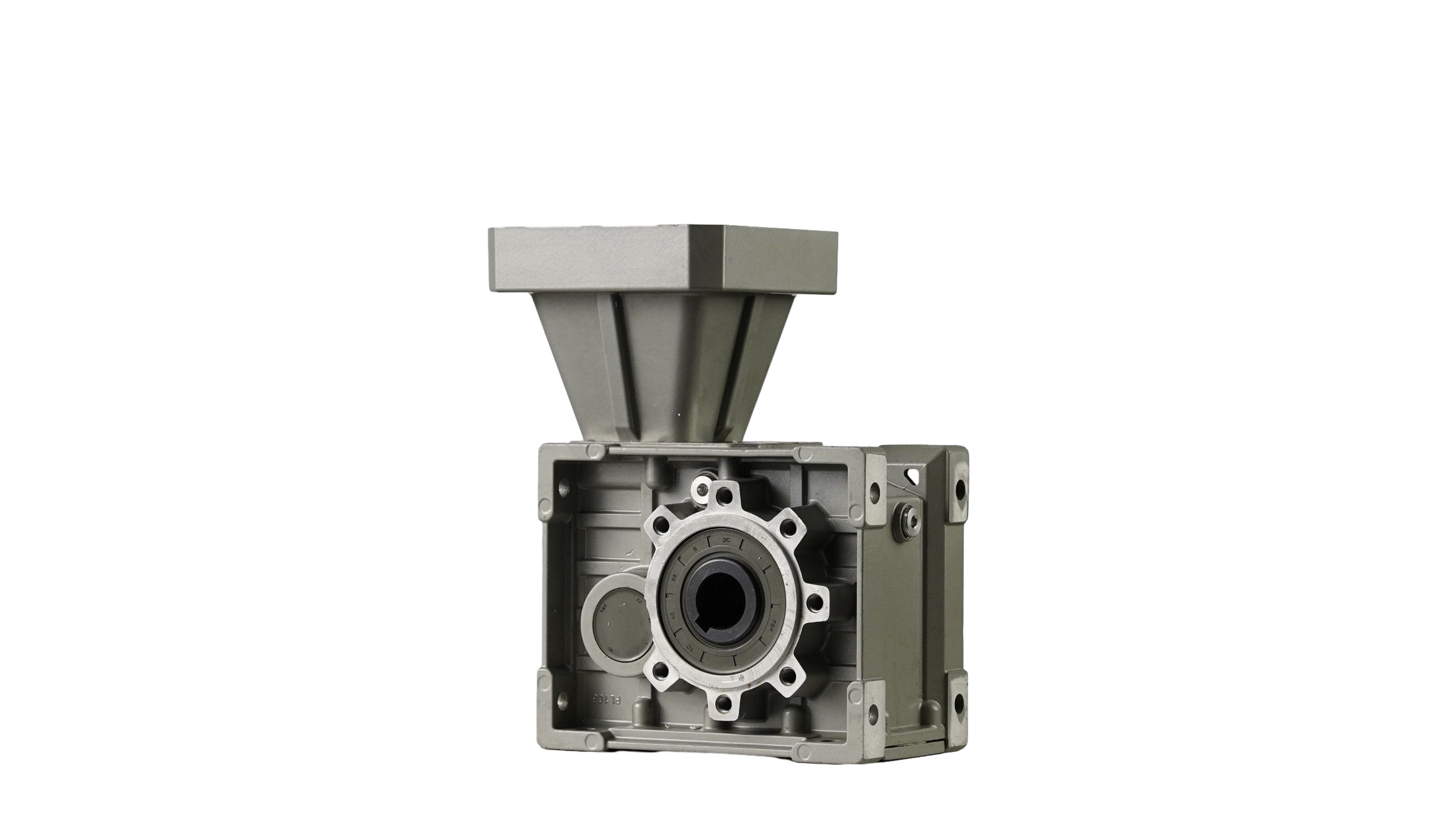
Traditional mechanical power transmission systems rely heavily on gearboxes, belts, and pulleys. These mechanical linkages inevitably introduce wear, elasticity, and backlash into the drive train. Such artifacts severely limit system precision and increase maintenance demands over the machine's lifespan. When dealing with highly dynamic loads, engineers need a cleaner, more direct method to transfer power.
Enter the direct-drive solution. A Torque Motor operates as a high-pole-count, permanent-magnet synchronous system designed to deliver massive rotational force at low speeds. It completely eliminates mechanical linkages, connecting the load directly to the rotor. This creates an incredibly stiff and highly responsive motion system.
In this guide, we provide engineers and procurement teams with a clear evaluation framework. You will explore various topologies, decode essential torque rating specifications, and assess real-world implementation risks. This framework will help you determine if a direct-drive upgrade justifies the initial investment for your application.
Key Takeaways
Direct-Drive Mechanics: Torque motors eliminate mechanical transmission, mounting the load directly to the rotor for zero backlash and near-infinite stiffness.
Form Factor Advantages: Large hollow shafts (inner bores) and frameless designs streamline machine architecture, allowing centralized routing of cables, lasers, or cooling lines.
Specification Reality: Motor selection relies strictly on torque ratings (Peak vs. Continuous) rather than power, and thermal management is the primary bottleneck for continuous operation.
Total Cost vs. Upfront Premium: While initial acquisition costs are higher, the elimination of mechanical wear drastically reduces long-term maintenance and machine downtime.
What is a Torque Motor? (Direct Drive Fundamentals)
A Torque Motor is a specialized permanent-magnet synchronous motor (PMSM). It features an exceptionally high pole count. You can conceptually think of it as a "rolled-up linear motor." Standard servo motors generate high rotational speeds and rely on external gearboxes to multiply force. Direct-drive motors do the opposite. They generate exceptional rotational force at very low or even zero speeds directly at the shaft.
Frameless vs. Housed Designs
True machine integration relies heavily on "frameless" designs. Manufacturers deliver a frameless motor as two separate components: a bare rotor and a bare stator. It contains no external housing, no bearings, and no built-in feedback devices. Machine builders integrate these bare components directly into the host machine’s existing structural mechanics. This approach saves space and reduces overall system weight.
Housed designs do exist. They come fully enclosed, functioning as drop-in replacements for traditional servo-gearbox combinations. However, housed units often add unnecessary bulk. For the highest performance-to-weight ratio, engineers almost exclusively prefer the frameless approach.
The Stall Advantage
A unique defining characteristic of these drives is the stall advantage. Traditional motors often overheat and burn out quickly if the shaft locks up while drawing full current. Direct-drive systems can operate safely and indefinitely in a "stalled" or locked-rotor condition. They hold heavy payloads steady against gravity or external forces without sustaining thermal damage. This makes them perfect for tensioning applications, indexing tables, and robotics where holding position is as critical as moving.
The Engineering and Commercial Case for Torque Motors
Deciding to remove gearboxes from a machine architecture represents a major engineering shift. You must evaluate both the technical performance gains and the long-term commercial benefits.
Dynamic Performance & Precision
The immediate engineering benefit is dynamic performance. Eliminating gears means you achieve absolute zero backlash. There is no mechanical hysteresis to compensate for in the software. Because the load mounts directly to the rotor, the system achieves extremely high control-loop bandwidth. The drive responds to micro-adjustments in milliseconds. This level of precision is virtually impossible to maintain long-term in geared systems due to gradual tooth wear.
Streamlined Integration
These units typically feature a large hollow shaft or inner bore. This characteristic geometry accommodates complex machine designs. You can route electrical wiring, pneumatic plumbing, hydraulic cooling lines, or even optical laser paths straight through the center of rotation. This central routing minimizes the overall footprint of the machine and prevents cable tangling during infinite rotation.
Acoustic & Environmental Benefits
Sensitive manufacturing environments demand strict environmental controls. Because direct-drive systems have fewer moving parts, they drastically lower machine vibration. They eliminate the grinding noise associated with meshing gears, creating a much quieter shop floor. Furthermore, advanced winding techniques minimize torque ripple. This smooth motion proves vital for highly sensitive applications, such as semiconductor wafer production, where even microscopic vibrations ruin yields.
Maintenance and Uptime Economics
Procurement teams often hesitate at the higher upfront acquisition cost of direct-drive components. You can confidently offset this premium through zero-maintenance operation. Gearboxes require regular lubrication changes, seal replacements, and eventual mechanical overhauls. A frameless direct drive relies on magnetic fields. It experiences no internal mechanical wear. By eliminating these failure points, you drastically increase machine uptime and extend the operational life of the entire production line.
Evaluating Topologies: Matching Configuration to Application
Not all direct-drive units are built the same. Engineers must match the specific electromagnetic topology to the exact demands of the application. The wrong choice leads to thermal inefficiencies or compromised dynamic control.
Outrunner (External Rotor) vs. Inrunner (Internal Rotor)
The position of the spinning rotor dictates the motor's mechanical behavior. You must evaluate these two primary configurations.
Topology Feature
Outrunner (External Rotor)
Inrunner (Internal Rotor)
Rotor Position
Spins on the outside of the stator.
Spins inside the stationary stator.
Core Advantage
Maximum torque density; higher inertia.
Higher top speeds; highly dynamic start/stop.
Ideal Application
Heavy payloads, large indexing tables.
High-speed robotics, precise velocity control.
Inertia Matching
Excellent for matching large external loads.
Requires careful tuning for heavy external loads.
Flux Direction: Radial vs. Axial
Standard industrial units typically utilize radial flux topology. The magnetic lines of force travel radially outwards or inwards between the rotor and stator. Radial flux designs offer easier mechanical mounting and highly predictable thermal dissipation paths. They represent the industry standard.
Conversely, axial flux designs feature a unique layout where the magnetic flux runs parallel to the axis of rotation. This creates an ultra-flat "pancake" profile. You should select an axial flux Torque Motor when severe space constraints exist along the rotational axis, such as in compact robotic joints or specialized aerospace gimbals.
Precision Variants: Managing Detent Effects
Standard permanent magnet motors suffer from "cogging" or "detent" torque. This is the jerky, magnetic resistance you feel when spinning an unpowered motor shaft by hand. It occurs because the permanent magnets naturally try to align with the iron teeth of the stator.
For applications demanding ultra-smooth velocity control, engineers evaluate precision variants. Advanced slotless or ironless winding topologies completely remove the iron teeth from the stator. This design eliminates cogging entirely. While slotless designs sacrifice a small percentage of absolute peak torque, they deliver the flawlessly smooth rotation required for optical inspection, scanning, and printing systems.
Decoding Motor Specifications: 4 Torque States That Matter
Motor sizing relies strictly on torque ratings rather than pure horsepower or wattage. Misinterpreting these values leads to catastrophic failure or excessive system costs. You must understand the four distinct torque states.
1. Continuous (Running) Torque
Continuous torque defines the steady-state rotational force the unit can maintain indefinitely. It represents the maximum output before the motor exceeds its thermal equilibrium. If you run the drive above this value for prolonged periods, the internal heat generation outpaces the cooling capacity, destroying the windings. This value forms the baseline metric for all sizing calculations.
2. Peak Torque
Peak torque represents the absolute maximum output available for short, highly dynamic bursts. Machines utilize this state during rapid acceleration or sudden deceleration. Operating in the peak zone is strictly time-bound. Pushing peak torque too long carries severe risks, including demagnetizing the permanent magnets permanently or instantly melting the stator insulation.
3. Starting Torque
Starting torque is the initial rotational force required to overcome static friction and load inertia from a dead stop. In heavy industrial applications like extruders or large crushers, the starting friction is immense. Ensure your selected motor has sufficient peak overhead to deliver the required starting torque without stalling the control sequence.
4. Stall Torque
Stall torque is the maximum rotational force exerted when the shaft is mechanically blocked or actively holding a static position against external forces. Because direct-drive systems act as holding brakes in many applications, verifying the continuous stall torque limits ensures the load will not slip or overheat the stator during stationary holding phases.
Implementation Realities: Sizing, Thermals, and Integration Risks
Transitioning to a gearless architecture exposes the system to new engineering challenges. The motor absorbs all dynamic forces directly. You must mitigate integration risks early in the design phase.
The Thermal Bottleneck
Thermal management is the primary bottleneck for continuous operation. In traditional systems, gearboxes help dissipate heat and separate the motor from the load. In a direct-drive setup, the motor absorbs all thermal loads.
Air cooling rarely suffices for heavy industrial tasks. Liquid cooling, usually via internal water jackets integrated into the machine housing, is almost universally required to achieve the manufacturer's advertised continuous torque ratings. Without adequate cooling, you must derate the motor's performance significantly.
Best Practice: Always design the cooling channels into your machine frame before ordering frameless components. Retrofitting cooling jackets is nearly impossible.
Machine Frame Rigidity
A direct-drive system is only as good as the machine frame it sits in. The coupling is extremely rigid. If your structural frame lacks adequate mass and stiffness, the high dynamic forces of the motor will induce resonant vibrations throughout the chassis. This resonance completely negates the precision benefits of the drive. The machine structure must easily absorb the high-frequency control loop adjustments without flexing.
The Motor Constant (Km)
Many procurement teams make the mistake of sorting catalogs strictly by peak torque. This is a flawed metric for efficiency. Application engineers guide buyers to evaluate the "Motor Constant" (Km).
The Motor Constant expresses torque per square root of power dissipation ($Nm / \sqrt{W}$). It indicates the true thermal efficiency of the electromagnetic design. A higher Km means the motor produces more force while generating less waste heat. Prioritize high Km ratings when cooling options are limited or when operating in thermally sensitive environments.
Conclusion
Torque motors represent a fundamental shift in machine design, moving away from mechanical complexity toward electrical simplicity and software-defined precision. By eliminating gearboxes, engineers unlock zero-backlash accuracy, lower acoustic noise, and achieve near-infinite holding capabilities.
To successfully transition to this technology, follow these actionable next steps:
Audit Structural Rigidity: Assess your current machine frame to ensure it can handle high-frequency dynamic forces without inducing resonance.
Map the Load Profile: Clearly separate your application's continuous holding needs from its short-burst peak acceleration demands.
Plan for Thermals: Design your water-cooling infrastructure into the machine housing before selecting the stator.
Consult the Experts: Work directly with application engineers to verify frameless integration sizing and ensure proper rotor-stator air gap alignment during assembly.
FAQ
Q: Why doesn't a motor with constant torque accelerate infinitely?
A: As rotational speed (RPM) increases, physics introduces opposing forces. The spinning rotor generates Back-Electromotive Force (Back-EMF), which resists the incoming supply voltage. Simultaneously, aerodynamic windage and bearing friction rise. Once these counter-forces equal the motor's electromagnetic torque, the net torque reaches zero. At this exact point of equilibrium, the system stops accelerating and settles into a steady, constant speed.
Q: Are torque motors direct replacements for standard servo motors?
A: Not always. Standard servo motors paired with planetary gearboxes remain highly cost-effective for high-speed, low-inertia applications. You should strictly evaluate direct-drive solutions for scenarios requiring low-speed operation, massive holding force, zero mechanical backlash, or ultra-high precision where mechanical linkages introduce unacceptable errors.
Q: What does "cogging" or "detent effect" mean in motor selection?
A: Cogging is the jerky, pulsating magnetic resistance you feel at very low speeds. It occurs because the permanent magnets on the rotor constantly try to align with the iron teeth of the stator. High-end precision units eliminate this issue by using specialized "slotless" or "ironless" winding designs. This ensures perfectly smooth rotation for sensitive optical and scanning applications.